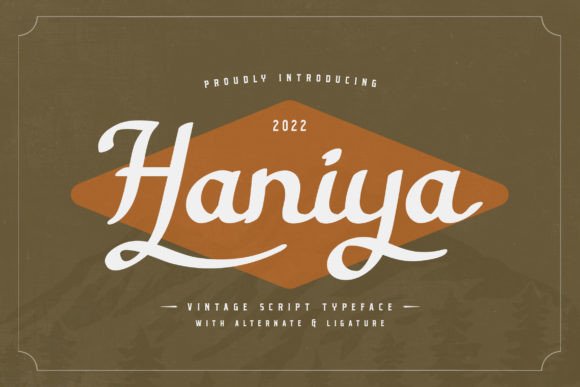
Haniya Vintage Script Font for Web Design
Haniya is a vintage script font that brings a touch of elegance and nostalgia to digital design. Its flowing, handwritten style makes it ideal for creative projects where a personal and artistic feel is essential. As a web designer, I've found that Haniya works particularly well in situations where the brand needs to convey warmth, authenticity, or a retro aesthetic.
With its unique character shapes and subtle variations in stroke weight, Haniya adds visual interest without overwhelming the layout. It's perfect for use in headers, banners, and decorative elements where a more traditional or handcrafted look is desired. The font’s versatility allows it to be used across multiple platforms, from websites to social media graphics, ensuring a cohesive brand identity.
Using Haniya in Web Design Layouts
When designing for the web, choosing the right font can significantly impact readability and user engagement. Haniya, as a script font, is best suited for short phrases and titles rather than long blocks of text. This makes it an excellent choice for hero sections, call-to-action buttons, and section headings on landing pages.
For example, using Haniya in the header of a boutique online store can instantly create a warm and inviting atmosphere. Pairing it with a clean sans serif font like Helvetica or Arial for body copy ensures that the content remains easy to read while maintaining a visually appealing hierarchy.
In a creative portfolio site, Haniya can be used for project titles or taglines, giving the design a personal and artistic flair. It also works well in digital ads, especially those targeting niche markets that appreciate a vintage or handmade aesthetic.
Readability and Visual Hierarchy
While Haniya is visually appealing, it's important to consider its impact on readability. Script fonts can be challenging to read at smaller sizes or on mobile screens. To ensure legibility, it's recommended to use Haniya for larger text elements such as headlines, subheadings, and call-to-action buttons.
When designing for responsive layouts, always test how Haniya appears on different screen sizes. Avoid using it on dark backgrounds unless you have sufficient contrast. Additionally, ensure that the font does not clash with other design elements such as images or overlays.
For optimal visual hierarchy, pair Haniya with a complementary sans serif or serif font. This combination helps maintain balance and clarity while adding depth to the overall design. A common approach is to use Haniya for headings and a simple sans serif font for body text, creating a clear distinction between primary and secondary content.
Brand Identity and User Engagement
The choice of font plays a crucial role in shaping a brand’s identity. Haniya, with its vintage charm, can help establish a brand that feels personal, artisanal, or nostalgic. This is particularly effective for businesses such as wedding planners, boutique stores, or creative agencies that want to stand out from the competition.
By incorporating Haniya into branding elements like logos, banners, and social media posts, designers can reinforce a consistent visual language that resonates with the target audience. This not only enhances brand recognition but also increases user engagement by creating a more memorable experience.
For instance, a coaching website that focuses on mindfulness and self-care could use Haniya for its main title and key messaging. This would align with the brand’s values and create a sense of trust and approachability.
Practical Considerations for Web Use
Before implementing Haniya on a website, it's essential to check if the font supports the necessary styles, weights, and multilingual characters. Many premium fonts offer extensive character sets, which is especially useful for global audiences.
Ensure that the font file format is compatible with web standards, such as WOFF or WOFF2. These formats provide better performance and compatibility across different browsers and devices. Also, verify whether the font includes alternates or ligatures that can enhance the visual appeal of the design.
Commercial use of Haniya requires proper licensing. When working on client projects, online stores, or digital templates, always confirm that the font license covers all intended uses. This avoids any legal issues and ensures that the font can be used confidently across various platforms.
Finally, when pairing Haniya with other fonts, aim for harmony rather than contrast. A well-balanced font stack can elevate the design and improve the overall user experience. Whether you're building a course sales page, a blog header, or a branded digital kit, Haniya offers a versatile solution that aligns with modern typography trends.